Bablo Marto Naik (1864-1958)
If you walk through the streets of Panjim today or cross the Banastarim bridge, you are walking in the footsteps of Bablo Marto Naik. Yet, for decades, his name has remained a footnote in the history he helped build. A self-made man who rose from the Bhandari community during the height of Portuguese rule, Bablo Naik was not just a businessman, he was a force of social resistance who used his wealth to uplift his people.
Bablo Marto Naik was born in 1864 in the quiet, riverine village of Volvoi, in the Ponda taluka. Born into a time when the Bhandari community was tethered to the soil and traditional occupations, his horizons could have easily been limited to the boundaries of his village.
However, possesing an innate ambition that outgrew his surroundings, he migrated to Panjim as a young man. He arrived in the capital not with wealth, but with a relentless work ethic and a sharp eye for opportunity.
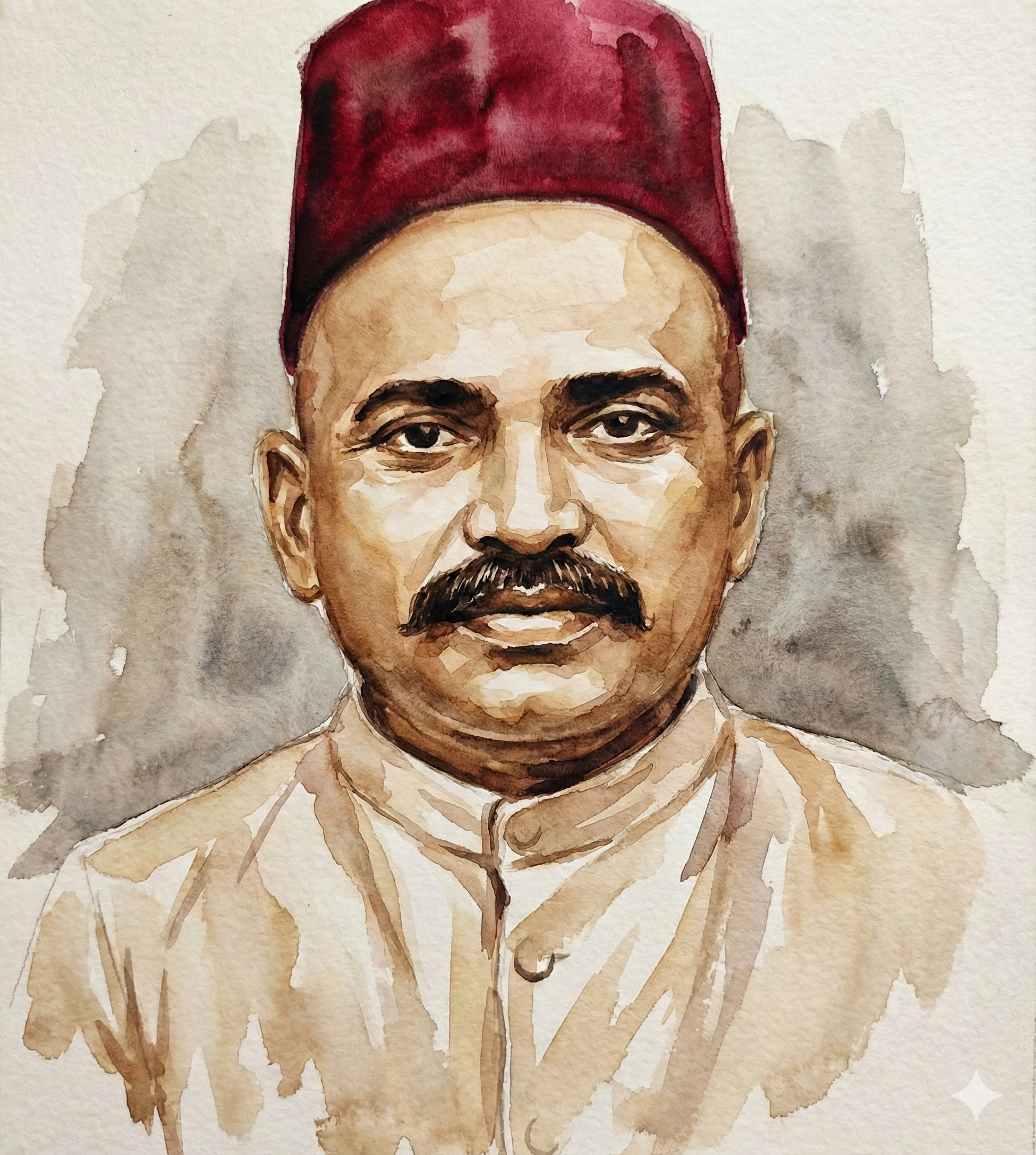
The Man Who Lit the City of Panjim
Bablo Marto Naik can be described as the Jotirao Phule of Goa. A social reformer, educationist, and successful entrepreneur, his illustrious life left an indelible mark on the making of modern Goa and the transformation of the Bhandari community.
Naik began his entrepreneurial journey with a modest fleet of bullock carts, which he contracted out for transporting goods. He soon rose to become a prominent contractor in the capital. During his time, he held the two most critical contracts for the city of Panjim: sanitation and public illumination. Employing a workforce of 30 to 40 people, he kept the city clean and lit. Every evening, long before electricity was in common use, his men would diligently clean and light the street lamps that kept the capital out of darkness.
His acumen as a contractor was put to the ultimate test when he won the bid to lay the foundation for the Banastarim Bridge. After several unsuccessful attempts by others, Naik succeeded in laying a robust foundation upon which the bridge was eventually constructed. The quality of his work was so superior that the foundation reportedly survived military attempts to destroy it during the retreating operations of 1961.
In 1908, when several prominent businessmen of Panjim came together to establish the Mustifund Saunstha, Naik resolved to build his a school himself where kids from the bahujan communities could study. It is with this intention that he started a Marathi primary school in St. Inez, the Ramdas Vidyalaya.
The founders of Mustifund were so resentful of this initiative that they mocked his school as Kavlyanchi Shala ("The School of Crows"). They spread misinformation, claiming the school lacked trained teachers and that sending children there would ruin their futures. Amidst this hostility, Naik stood tall. He not only funded the school but even arranged accommodation on the first floor of his own home for students traveling from distant villages. The school was later converted into a government institution, known today as GPS Ramdas, and is a Kannada medium primary school. The school building is located next to the Goa College of Pharmacy.
Naik also dedicated his wealth and influence to the broader upliftment of the Bahujan Samaj. He was instrumental in securing Mahajan rights over the Rudreshwar Temple for the Bhandari community. In a visionary move, he drafted a Compromisso (statute) that allowed every Bhandari member to be included as a Mahajan, rather than limiting it to a specific lineage. Additionally, he fought to secure and protect the rights of the Bhandari community at the Mahalakshmi Temple in Panjim.